DAISAN combines inkjet printing with its own adhesion-promoting coating
von Ansgar Wessendorf,
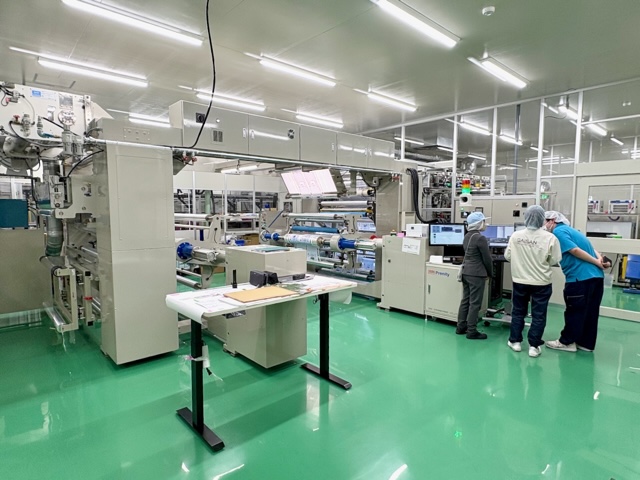
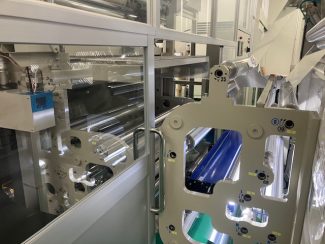
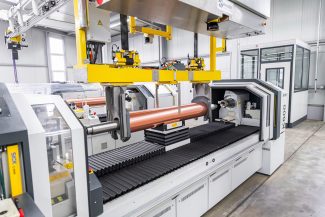
The FXIJ from Think Laboratory, installed at DAISAN in February 2026, complements gravure printing by enabling digital production of short runs and packaging ranges with numerous variants. The press uses water-based inkjet inks and thermal drying and processes substrate widths from 600 to 1,150 mm. Compatible materials include OPP, PET, PE and polyamide.
(Source: Think Laboratory)
Short runs, numerous product variants and a switch to gravure printing as volumes increase: With the FXIJ from Think Laboratory, DAISAN is expanding its capabilities in packaging production. The company has already produced 40 packaging items totalling approximately 40,000 linear metres, demonstrating the commercial use of the digital printing press. For further industrial applications, the Japanese packaging printer is continuing to develop the interaction between water-based inkjet inks and its proprietary adhesion-promoting coating. Particular attention is being paid to the functional properties and subsequent converting of the printed films.
Digital printing has already become part of everyday production at DAISAN. Since installing the FXIJ in February 2026, the company has been producing packaging for food and household products on the inkjet press. Think Laboratory is a Japanese supplier of gravure cylinder manufacturing equipment and digital printing presses. The production overview provided in September covers 20 packaging items for food products intended for people requiring care, totalling approximately 20,000 linear metres. These are supplemented by ten household product packaging items accounting for around 10,000 linear metres and another ten food packaging items totalling a further 10,000 linear metres.
Anzeige
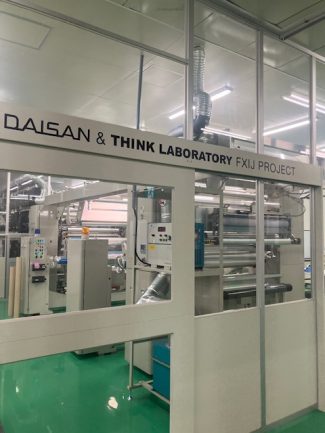
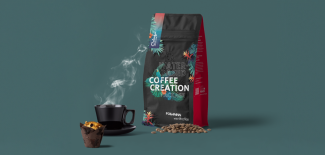
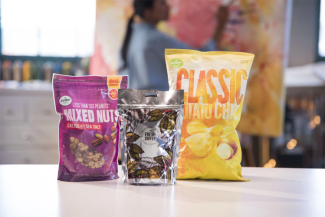
DAISAN and Think Laboratory are working closely together on the FXIJ project. The production of 40 packaging items totalling approximately 40,000 linear metres already demonstrates the press’s commercial use. These include packaging for food and household products. (Source: Think Laboratory)
These orders reflect a targeted expansion of the company’s production capabilities: DAISAN aims to manufacture new products, limited editions and product ranges with numerous variants in precisely the quantities required. Digital printing complements the company’s existing gravure printing operations. At the same time, DAISAN is drawing on its experience in film coating to expand the range of applications for water-based inkjet inks. A proprietary adhesion-promoting coating, known as Anchor Coating, is designed to improve ink adhesion and help meet additional requirements for industrial applications.
Producing the right quantities at the right time
The investment was driven by orders for which actual demand falls below the economically viable production volumes of gravure printing. New products are initially required in small quantities, limited editions need individual designs, and extensive product ranges are spread across numerous variants. For such orders, the costs of producing, storing and managing gravure cylinders are particularly significant. DAISAN also identifies time-consuming colour and product changeovers and waste generated by the two-component inks used in gravure printing as further challenges.
Digital printing offers additional flexibility in these areas. It requires no printing plates or cylinders, and design changes can be made through the print data. This allows DAISAN to produce short runs with a high number of variants in the quantities actually needed. According to customer feedback received so far, eliminating printing forme costs and producing individual variants according to demand are among the main advantages. The company reports that existing products are already being transferred to digital printing and further applications are being developed.
DAISAN uses both printing processes according to their respective strengths: digital printing for short runs and numerous variants, and gravure printing for large volumes of standard products. Prototypes, new products and items with uncertain demand can initially be produced digitally. If volumes increase, production can subsequently be transferred to gravure printing. DAISAN quotes a standard delivery time of two to three weeks for digital printing orders.
Wide-web capability as an investment criterion
The ability to process wide webs played a central role in selecting the digital printing press. With plans to expand into industrial materials and large-format films, DAISAN placed particular emphasis on a web width of around 1,100 mm. Other selection criteria included compatibility with the existing gravure presses and investment and operating costs, including ink consumption and maintenance.
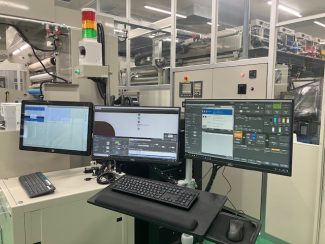
All the information at a glance: the operator control panel of the FXIJ digital inkjet printing press. (Source: Think Laboratory)
The water-based ink system was another factor in the decision. DAISAN saw potential to reduce volatile organic compound (VOC) emissions compared with conventional solvent-based gravure printing.
The installed FXIJ uses water-based inkjet inks and thermal drying. According to DAISAN, the press handles substrate widths from 600 to 1,150 mm and operates at web speeds of 10 to 60 m/min. Suitable materials include OPP, PET, PE, polyamide, cellophane, paper, PVC and other substrates. Depending on the substrate, material thicknesses range from 15 to 150 µm.
The intended range of applications includes food packaging, industrial adhesive tapes, and marking and identification tapes. Other potential applications involve paper, PVC and speciality films, as well as tubular packaging films for adhesive tapes. While DAISAN is already producing commercial packaging orders on the press, industrial applications are still undergoing trials and customer evaluation.
During the selection process, DAISAN compared the FXIJ with other digital printing systems available in Japan. The assessment covered printing technology, web width, speed, ink system and suitability for the intended applications. Ultimately, the decisive factor was how well the FXIJ matched the company’s production requirements.
Proprietary coating for more demanding applications
DAISAN’s research and development department developed the Anchor Coating before the FXIJ was installed. Film treated with this adhesion-promoting coating is being developed and marketed under the name W-IJ. The primer layer applied to the film surface is intended to improve the adhesion and durability of the subsequently printed water-based inkjet inks.
The company is building on its existing expertise in coating technology. According to DAISAN, the underlying adhesion-enhancement technology was developed in 2020. Film surfaces are coated with a special synthetic resin to improve the adhesion of printing inks and adhesives. One of the original applications emerged from a collaboration with an adhesive tape manufacturer. With W-IJ, DAISAN is transferring this expertise to the requirements of water-based digital printing.
Based on the company’s experience to date, digital printing alone does not always achieve the required levels of ink adhesion and solvent resistance in industrial applications. Subsequent converting processes and long-term durability requirements may also make an additional coating necessary. The properties being investigated therefore include suitability for dry lamination.
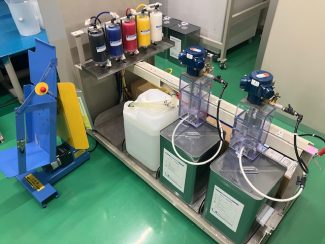
The FXIJ series prints with the four process colours cyan, magenta, yellow and black, as well as white. (Source: Think Laboratory)
DAISAN’s Anchor Coating is intended to meet the additional functional requirements of specific applications. Its use consequently depends on the properties required of the finished product.
The W-IJ technology is primarily intended for PET, OPP and similar films. DAISAN identifies adhesive tape backing films, films for building materials and packaging films printed on the outer surface as potential applications. The development objective is to achieve properties comparable to those of gravure inks used with a hardener.
Matching the ink and primer
DAISAN has specifically tailored the Anchor Coating to the water-based inkjet inks used in the FXIJ. The main considerations are ink adhesion, solvent resistance and print reproduction. Think Laboratory supported the evaluation of suitable processing conditions for the coating system. Coordinating the pretreatment with the digital printing process was therefore an integral part of the implementation.
Initial qualitative indications of the coating’s effectiveness come from scratch tests described by DAISAN. Ink detached from uncoated samples, whereas no adhesion problems were observed with samples treated with Anchor Coating. The results indicate improved resistance under the respective test conditions.
DAISAN has also gained initial practical experience with subsequent converting processes. Adhesive was applied to industrial materials after the adhesion-promoting coating and digital printing steps. According to the company, no processing problems occurred. At the time the information was provided, quantitative data on laminate bond strength and heat-seal strength were still being evaluated. The experience gained so far therefore provides a basis for further applications, although suitability will still need to be verified in each individual case.
In parallel, DAISAN is developing a hybrid production workflow. Its existing gravure presses are intended to apply the adhesion-promoting coating or primer, after which the pretreated film will be printed on the FXIJ. This would allow the existing gravure equipment to perform a processing step within digital print production in the future.
Enabling the transition between digital and gravure printing
Companies that allocate orders according to run length and the number of variants must also consider whether print designs can be transferred between processes. How accurately can a design initially produced digitally be reproduced in gravure printing at a later stage?
According to DAISAN’s experience, this is relatively straightforward with standard designs. However, very fine text and highly detailed graphics can present limitations: Some details that can be reproduced digitally may not be achievable in gravure printing.
With its proprietary Anchor Coating, DAISAN adapts the film surface to the inkjet inks used in the FXIJ. The adhesion-promoting coating is designed to improve ink adhesion and solvent resistance for demanding industrial applications. In scratch tests described by DAISAN, ink detached from uncoated samples. Samples treated with Anchor Coating exhibited good ink adhesion under the respective test conditions. (Source: Think Laboratory)
When transferring jobs from gravure to digital printing, ink density can become the limiting factor. The high ink densities achievable in gravure printing can sometimes be difficult to reproduce digitally. The choice of printing process therefore also depends on the design. If a subsequent transfer between processes is anticipated, critical details and colour effects should already be taken into account during the design stage.
To ensure consistent colour reproduction, DAISAN uses colour-matching software and proofing printers. An automated inline inspection system monitors production for print defects. The overall quality control process follows the same basic procedures as those used in gravure printing.
Integrating the new process into production
DAISAN supported the introduction of the FXIJ with a multi-stage training programme. Operators initially completed three weeks of training at Think Laboratory, learning how to operate and maintain the press on a training machine. Following installation, they received a further month of practical training on the company’s own equipment. Employees with gravure printing experience also attended a three-day course in image processing.
During process optimisation, DAISAN paid particular attention to humidity, temperature and cleanliness around the printhead unit. It also became apparent that banding, a phenomenon that can occur in inkjet printing, may be particularly noticeable in certain designs. The company therefore assesses the suitability of the printing process with reference to both the design and the intended application. Implementation consequently involved optimising operating conditions as well as evaluating which jobs were appropriate for the new process.
For food packaging, DAISAN states that it uses inkjet inks whose raw materials are included in Japan’s positive list system under the Food Sanitation Act. Direct contact between the printing inks and food is not recommended. Migration behaviour is to be assessed according to the relevant customer requirements and intended application.
The approximately 40,000 linear metres produced so far demonstrate the press’s commercial operation. The main benefit identified to date is the ability to accommodate additional orders and produce short runs with numerous variants without the need for printing formes.
From an additional printing process to a proprietary material offering
With the FXIJ, DAISAN is pursuing a growth objective that extends beyond transferring existing gravure orders to digital printing. Short runs, a high number of variants and new applications are intended to generate additional business amounting to 100,000 m² per month.
W-IJ is expected to play a central role in this development. DAISAN is continuing trials of industrial materials on its own FXIJ, alongside customer evaluations and further product development. The aim is to generate additional commercial orders. In the longer term, the company intends to sell its adhesion-coated films through distribution partners to users of other digital printing systems as well. No further investments in printing equipment are currently planned.
Conclusion
The introduction of the FXIJ has already expanded DAISAN’s production capabilities. The company is producing commercial packaging orders digitally while continuing to use gravure printing for larger volumes. With its proprietary adhesion-promoting coating, the development extends beyond digital printing technology itself. Coordinating the printing press, ink and film surface is intended to establish the basis for a material offering that could eventually also be made available to other digital printing users. Further testing will determine which industrial applications can be realised. The orders produced and processing experience gained so far provide an initial foundation for this development.