NC-Free Printing Inks as a Key to Recyclable Packaging
hubergroup Expands Its Portfolio for Flexible Packaging
von Ansgar Wessendorf,
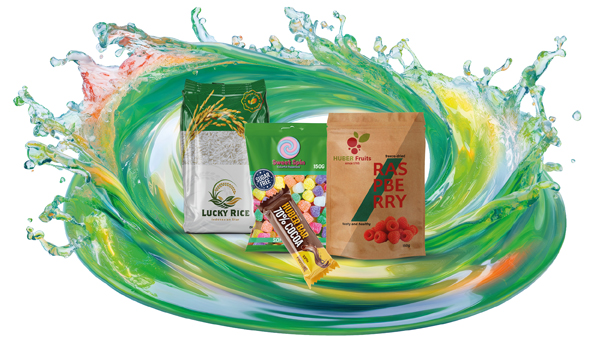
Gecko CycleOne combines the requirements of modern recycling concepts with the performance characteristics of high-quality packaging solutions.
(Source: hubergroup)
The requirements for flexible packaging are currently undergoing fundamental changes. Technologies that were considered industry standards for many years are increasingly being reassessed. Regulatory requirements, design-for-recycling criteria and ambitious sustainability targets throughout the value chain are prompting the packaging industry to rethink materials and processes. Printing inks are also affected by these developments.
Although printing inks account for only a small proportion of the total weight of packaging, they can have a significant impact on the quality of recyclates and the efficiency of recycling processes. Nitrocellulose-based systems, in particular, are increasingly coming under scrutiny because they can adversely affect the quality of recycled plastics. Printers and converters therefore face the challenge of finding solutions that meet growing recycling requirements while maintaining high standards of print quality, process reliability and cost-effectiveness. This is precisely where Gecko CycleOne, the new printing ink system from specialty chemicals manufacturer hubergroup Print Solutions, comes into play.
Anzeige
“We developed our PU-based systems with the aim of making the transition to NC-free solutions as straightforward as possible. In many applications, they can therefore be integrated into existing production processes with only minor adjustments“, Dr Lutz Frischmann, Product Director Flexible Packaging at hubergroup (Source: hubergroup) (Bild: HACKLFOTO)
Why Nitrocellulose Is Coming Under Increasing Pressure
For decades, nitrocellulose (NC) has been a well-established binder for high-quality solvent-based flexographic and gravure printing inks. The technology offers excellent printability, high colour strength, outstanding gloss and good processing properties. As a result, it has become a global standard in flexible packaging.
However, the growing demand for a circular economy is changing the conditions under which these systems are used. On the one hand, regulatory requirements are becoming more stringent. The European Packaging and Packaging Waste Regulation (PPWR), for example, aims to ensure that packaging is generally recyclable by 2030. At the same time, studies conducted as part of initiatives such as PrintCYC have shown that NC-containing printing inks can negatively affect the processability as well as the optical and olfactory properties of recycled plastics. Consequently, leading initiatives such as RecyClass and CEFLEX are defining increasingly strict limits for the permissible NC content in flexible packaging.
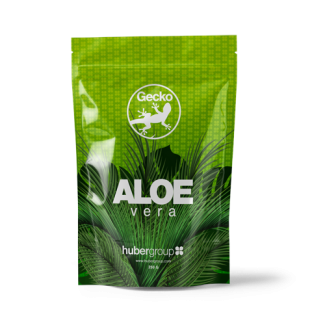
hubergroup’s Gecko sample packaging features delicate leaf motifs, graduated shades of green and contrasting white lettering. (Source: hubergroup)
The search for high-performance alternatives is therefore becoming increasingly important. With its broad technology portfolio, hubergroup offers customers tailored solutions to support the transition towards a circular future for flexible packaging. After all, every application has its own requirements in terms of packaging design, recycling processes and performance. The Gecko and HYDRO-X product ranges therefore combine complementary solutions – from high-performance water-based ink systems and NC-based inks that comply with applicable design-for-recycling limits to deinkable and NC-free technologies. Polyurethane (PU)-based systems, in particular, are considered a promising approach, as they are classified as recycling-compatible under the most important design-for-recycling guidelines.
Polyurethane as a Technological Alternative
Polyurethane-based printing inks are not fundamentally new. For a long time, however, they were regarded as specialised solutions for certain lamination applications. The challenge for ink manufacturers was to further develop PU-based ink ranges to match the printing and processing properties of conventional NC systems, including in surface printing applications, while offering advantages in terms of recyclability. Developing such systems requires precise coordination of binder chemistry, pigmentation and processing behaviour.
hubergroup has been developing PU-based technologies for many years. As early as 2015, the company introduced some of the first PU-based solutions for flexible packaging and has continuously expanded its portfolio ever since. Complementing its existing NC-free products Gecko Platinum and Gecko Xtreme White, hubergroup recently introduced Gecko CycleOne – a new generation of NC-free printing inks based on its proprietary polyurethane technology.
“Our particular strength lies in the unique combination of our in-house polyurethane raw material development, extensive formulation expertise and application-specific know-how. This has enabled us to develop tailored ink systems with Gecko CycleOne and Platinum that specifically meet the demanding requirements of printers and packaging manufacturers,” explains Dr Lutz Frischmann, Product Director Flexible Packaging at hubergroup.
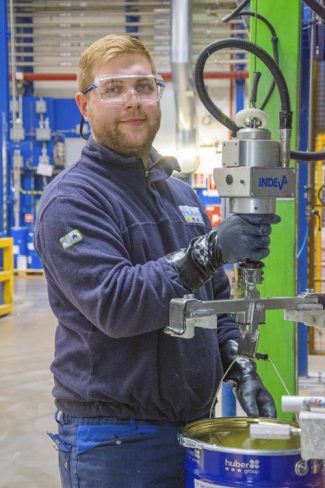
Production of Gecko printing inks at hubergroup Italia. (Source: hubergroup)
The result is an ink system for recyclable packaging that delivers high colour brilliance, good gloss, excellent mechanical properties and reliable processing under everyday production conditions. In terms of print quality and performance, it is therefore fully comparable to conventional NC-based systems.
Modular Systems Reduce Complexity
Another key focus during development was operational efficiency. While printers must manage an increasing variety of packaging structures and customer requirements, they are also under growing pressure to reduce inventory levels and process complexity.
Gecko CycleOne therefore follows a modular approach. The same pigment concentrates can be adapted to different applications using specific system additives. Depending on the requirements, formulations can be created for surface printing, reverse printing or lamination applications.
This concept simplifies inventory management, increases flexibility and enables faster adaptation to changing production requirements. The portfolio includes white inks, CMYK process colours, varnishes and primers, covering the essential requirements of modern packaging production.
The Transition to NC-Free Production
For many converters, however, the crucial question is no longer whether NC-free technologies will become established, but how complex the transition will be.
“We developed our PU-based systems with the aim of making the transition to NC-free solutions as straightforward as possible. In many applications, they can therefore be integrated into existing production processes with only minor adjustments,” explains Dr Lutz Frischmann.
To support printers throughout the implementation process, hubergroup provides comprehensive technical assistance and application expertise.
Part of a Long-Term Strategy
Gecko CycleOne should not be viewed as a standalone product, but rather as part of a comprehensive approach to future-ready packaging solutions. With the new ink range, hubergroup aims to support converters in implementing recyclable packaging concepts while meeting the demanding requirements for print quality, efficiency and process reliability.
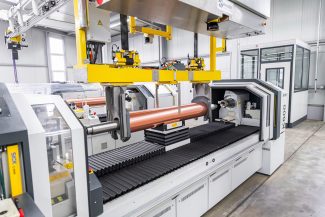
hubergroup India produces raw materials for the manufacture of printing inks and coatings. (Source: hubergroup)
A clear trend is emerging across the packaging industry. The discussion is increasingly shifting away from whether new printing ink technologies are needed towards which solutions can most effectively support the transition to a circular economy. Printing inks are increasingly being recognised as an integral part of packaging design and recyclability.
Against this background, Gecko CycleOne is positioned as a technology that actively supports this transformation. The system combines the requirements of modern recycling concepts with the performance characteristics that printers and brand owners expect from high-quality packaging solutions. It thus represents another element of the guiding principle behind hubergroup’s Gecko ink range: “Shaping Next-Generation Flexibles”.
In the long term, the competitiveness of packaging solutions will increasingly depend on how effectively they can be integrated into functioning material cycles. Printing inks are evolving from an often underestimated component of packaging into an important factor influencing its recyclability. With its broad portfolio of NC-based, deinkable, PU-based and water-based technologies, hubergroup supports customers in identifying the most suitable approach for their specific applications on the path towards a more sustainable circular economy.