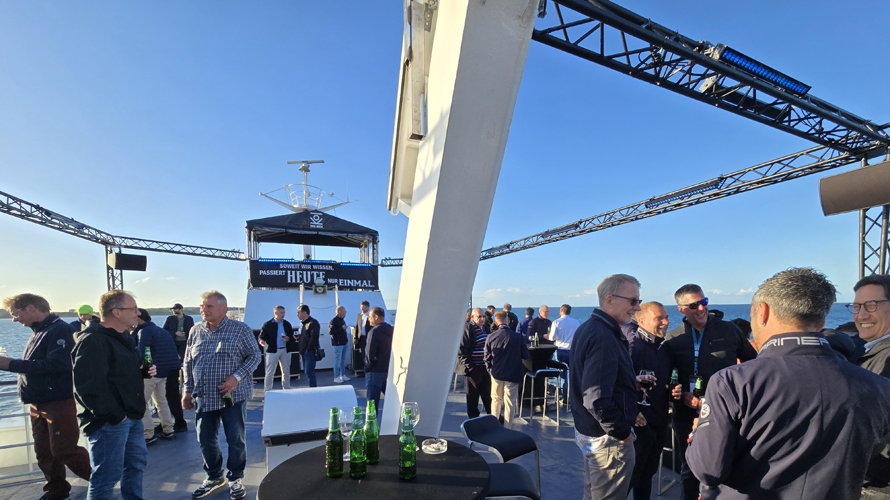
Another highlight: The boat tour on Kiel Fjord gave participants the opportunity to exchange ideas, relax and experience the region’s maritime atmosphere together
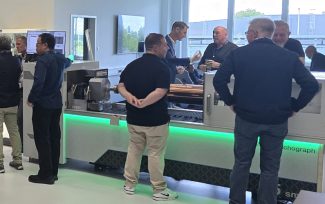
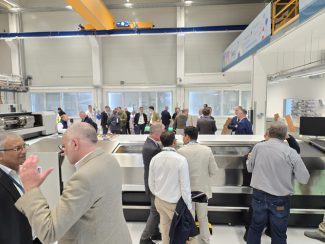
More than 200 industry experts, customers and partners gathered on June 9 for the first Heliograph Innovation Day at the new headquarters of Hell Gravure Systems in Schwentinental near Kiel. At the modern Customer Center, the seven companies of the Heliograph Holding presented their comprehensive portfolio of solutions for flexographic and gravure printing as well as for embossing applications.
The focus of the event was on two groundbreaking product innovations: the new Cellaxy C5 Smart direct laser system from Hell Gravure Systems and the Q-Trac Chrome system from Kaspar Walter, which was specifically developed for the quality inspection of chrome-plated gravure cylinders. With these developments, Heliograph Holding reaffirmed its commitment to setting new technological benchmarks and further advancing digitalization and efficiency improvements in the printing and engraving industry.
Anzeige
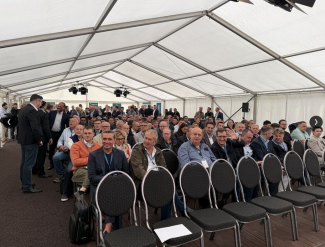
The first Heliograph Innovation Day attracted more than 250 industry experts, customers and partners to the new headquarters of Hell Gravure Systems in Schwentinental near Kiel
Q-Trac Chrome aims to replace proof printing
One of the highlights of the event was the official market launch of Q-Trac Chrome with Digital Proof Station – a development that fundamentally redefines quality control in fully automated gravure cylinder manufacturing.
Instead of a complex and cost-intensive physical proof print, Q-Trac Chrome captures all quality-relevant characteristics of the finished chrome-plated cylinder. The high-resolution analysis enables specialists to assess the cylinder surface in detail at the Digital Proof Station and grant approval entirely within a digital workflow.
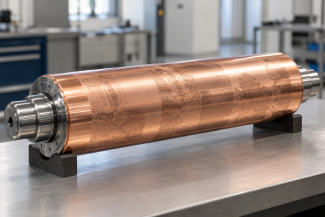
The system was specifically developed for the requirements of modern cylinder manufacturing and automates the acquisition of key quality parameters such as geometry, surface roughness and print image (repeat). This creates consistent, reproducible and highly accurate measurement results – independent of manual measurement processes and individual operator influences.
Another advantage is the automated calibration of the measurement systems. Q-Trac Chrome ensures regular and precise calibration without intervention by operating personnel, thereby increasing the comparability and reliability of quality data. Using intelligent algorithms, the system analyzes the chrome surface and specifically detects deviations relevant to production.
The captured measurement data is available in real time, enabling immediate analysis and rapid decision-making within the production process. Q-Trac Chrome therefore provides the foundation for fully digital quality control and enhanced process reliability in gravure cylinder manufacturing.
Eliminating the traditional proof print not only increases the efficiency of quality inspection but also improves process traceability, reduces proofing costs and shortens production cycles. Depending on the size of the surface being inspected, complete quality verification of a cylinder takes only 10 to 18 minutes.
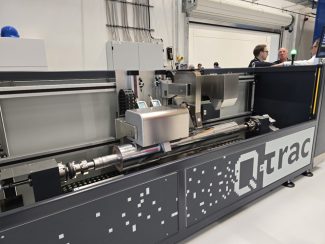
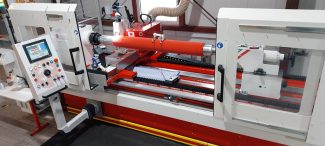
Live demonstration at the Customer Center of Hell Gravure Systems: Q-Trac Chrome inspects a chrome-plated gravure cylinder
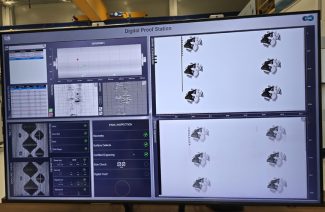
The data provided by Q-Trac Chrome enables specialists to perform a detailed inspection of the cylinder’s chrome surface at the Digital Proof Station and subsequently approve it within a fully digitalized workflow
– Analog quality control reaches its limits
In gravure cylinder manufacturing, many quality control processes are still based on analog inspection methods. Different, often non-standardized measuring devices are used, with results strongly depending on the experience and precision of the respective operator. This can lead to variations in measurement results and negatively affect process reliability.
In addition, the manual transfer of measurement data into higher-level systems makes seamless data utilization more difficult. Quality information is often not immediately available, making rapid decisions and targeted process optimization more challenging. Surface defects are frequently detected only during the final proofing stage – at a point when significant resources have already been invested in cylinder production.
The traditional proof print has so far been an essential step for reliably identifying errors in geometry, surface quality and engraving, thereby preventing faulty deliveries. However, since this inspection takes place at the end of the production chain, deviations often become visible only at a late stage. Corrective measures can therefore only be initiated with delays and result in additional costs.
The conventional proofing process also involves considerable effort: proofing presses, substrates, inks as well as additional personnel and time requirements place a burden on production economics. At the same time, transporting cylinders outside the production line increases the risk of potential damage.
Challenges also exist in the measurement technology itself. Irregular calibration intervals and dependence on operator experience can impair the quality and comparability of measurement data.
– Already in practical use
With Q-Trac Chrome, Kaspar Walter is setting new standards for transparency, process reliability and cost efficiency in modern gravure cylinder production. The solution paves the way toward fully digital quality control and supports cylinder manufacturers as well as packaging printers in making their production processes more efficient, faster and more sustainable.
The technology has already entered practical application: Several Q-Trac Chrome systems have been installed at cylinder manufacturers and packaging printers, where they optimize quality inspection processes within production environments.
At the event, the HelioKlischograph K5 Smart demonstrated its versatility as an engraving machine for a wide range of gravure cylinder engraving applications. With its comprehensive software and hardware package, it delivers fast and precise engraving results in the highest HD quality and can be upgraded to the fully automatic K5 Auto version at any time
New Cellaxy C5 Smart direct laser system
With the Cellaxy C5 Smart, Hell Gravure Systems is expanding its portfolio of direct laser engraving systems for the production of gravure and embossing cylinders. The new machine platform is based on the proven Cellaxy technology and is designed to make direct laser engraving more accessible by lowering the investment threshold.
Key features of the system include the flexible design of cell geometries to optimize ink transfer as well as the ability to reduce ink consumption. In addition, the technology enables highly precise reproduction of lines and fine structures and supports applications in packaging printing, tobacco packaging and embossing cylinder manufacturing.
The Cellaxy C5 Smart uses the software and automation functions of the existing Cellaxy platform. In its standard configuration, the system operates with a single-beam interleave configuration, which is designed to provide a balanced ratio between productivity and engraving quality.
Two machine variants are available for different application areas. The version for packaging and tobacco applications processes gravure cylinders with a length of up to 2,350 mm, a circumference ranging from 300 to 1,300 mm and a weight of up to 500 kg. A second variant for lightweight embossing applications is designed for roll lengths of up to 3,400 mm and circumferences of up to 1,300 mm, with a maximum cylinder weight of 500 kg.
Intelligent machine control: more automation, reduced copper consumption
With the technologies Machine Intelligence (MI) and Contour-Cut (CC), Datwyler Graphics presented solutions at the event for further automating the processing of copper surfaces in gravure cylinder manufacturing. The objective is to reduce manual intervention, standardize process sequences and optimize material utilization. The solutions generated strong interest among visitors.
The core element of the concept is an intelligent control algorithm that automates various process steps. These include the automatic measurement of cylinder circumference and runout as well as model-based calculation of the cylinder contour. Contactless runout measurement and one-button operation enable a largely automated process and reduce dependence on operator experience.
At the event, Datwyler Graphics presented innovative solutions based on Machine Intelligence (MI) and Contour-Cut (CC) for further automating copper surface processing in gravure cylinder manufacturing. The technologies reduce manual intervention, standardize processes and optimize material utilization. The solutions attracted strong interest from visitors
With Machine Intelligence technology, the CFM process (Copper Finishing Machine) can be fully automated. This opens up opportunities to reduce personnel requirements while increasing process consistency.
With Contour-Cut, Datwyler Graphics is also pursuing the goal of reducing copper consumption in cylinder manufacturing. Since no manual alignment is required and material removal is maintained consistently across the entire cylinder surface, the copper surface can be processed with greater precision. According to the company, this can result in copper savings of up to 20 to 40 micrometers per cylinder.
Conclusion
The first Heliograph Innovation Day clearly demonstrated the direction in which gravure cylinder manufacturing is developing: digitalization, automation and data-driven process control are becoming increasingly important throughout the entire value chain. The technologies presented address key challenges facing the industry – from improving production efficiency and reducing material and resource consumption to enhancing quality control.
While Q-Trac Chrome demonstrates the potential to replace the traditional proof print with a digital inspection process, the new Cellaxy C5 Smart is designed to facilitate access to direct laser engraving technology. At the same time, the automation and material-saving concepts presented by Datwyler Graphics showed how production processes can be further standardized and resources utilized more efficiently.
By combining expertise in engraving, surface finishing, quality control and automation, Heliograph Holding used the event to present current technological developments in a practical and application-oriented environment. The strong interest shown by visitors underlined the importance of solutions that support productivity, process reliability and sustainability across the printing and converting industry.