The doctor blade: a critical component in gravure printing
von Ansgar Wessendorf,
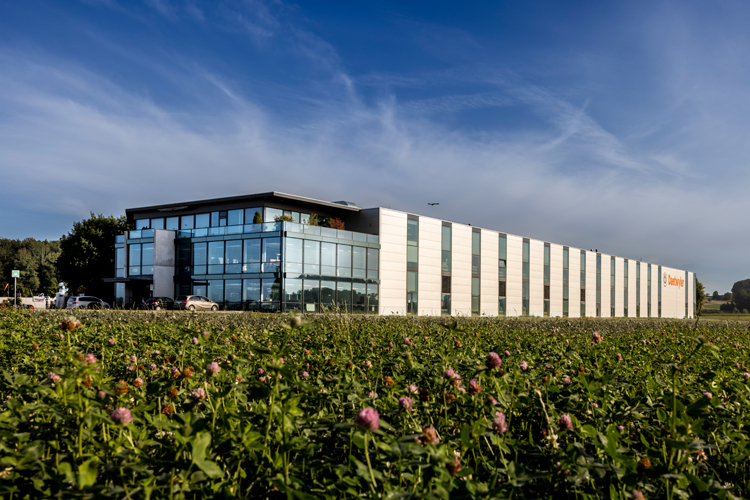
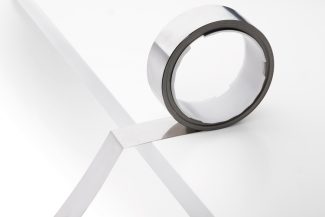
Based in Bleienbach, Switzerland, Daetwyler SwissTec is regarded as the global market leader in doctor blade development and production.
(Source: Daetwyler SwissTec)(Photo Credit: www.moodpix.ch)
Only a few tenths of a millimetre thick, it wears down and requires regular replacement. Yet the doctor blade is one of the key precision components of a gravure press. The contact zone between blade and printing cylinder determines whether the cylinder lands are wiped clean, the cells contain a controlled volume of ink and print quality remains consistent throughout the run. Problems at this interface cause hazing, streaks and doctor blade lines. In the worst case, they damage the chrome-plated cylinder surface or bring the press to a halt. The blade itself is a modest expense; the consequences of an unstable doctoring process can be far more costly.
What happens at the contact zone
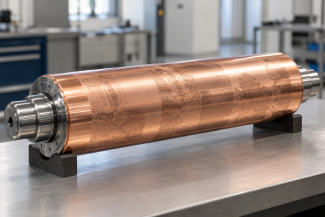
In gravure printing, the engraved cylinder initially picks up more ink than is needed to print the packaging design. Ink wets both the recessed cells and the non-printing lands and cylinder surface. Before the cylinder reaches the printing nip, the doctor blade removes the excess ink film from the lands and surface. At the nip, the impression roller presses the web against the engraved cylinder. Wetting, capillary action, mechanical pressure and electrostatic assist (ESA) support ink transfer from the cells to the substrate.
Anzeige
The doctor blade therefore ensures that a controlled volume of ink is available for printing. At the same time, flow conditions at the blade edge influence how completely the cells fill and whether air can escape. A numerical study published by TU Darmstadt in 2023 demonstrates how blade angle affects cell filling and the removal of entrapped air. An unsuitable angle can leave cells underfilled or trap air within them, resulting in voids and streaks.
Engraving, ink viscosity, cylinder surface condition, press speed, impression pressure, drying and substrate all form an interdependent process. The doctor blade determines how cleanly the lands and cylinder surface are wiped. It cannot, however, compensate for shortcomings elsewhere without consequences. Simply increasing blade pressure to address hazing also changes the blade angle, friction and wear.
The actual contact angle matters
The decisive parameter is the actual contact angle at the cylinder surface. Blade deflection can cause this to differ from the set angle. In many applications, the contact angle is between 55 and 65 degrees. There is no universally applicable target, however: engraving, ink system, cylinder circumference and width, press speed, blade design and press geometry must be considered together.
If the contact angle is too shallow, the contact area increases. Hazing, drag-out and tonal shifts may result. An excessively steep angle promotes unstable blade behaviour and chatter marks. Nor does high blade pressure automatically improve doctoring. It bends the blade, reduces the effective angle and widens the contact zone, increasing friction and wear. The guiding principle is therefore to use the lowest possible blade pressure, applying only as much as is needed to maintain reliable contact with the printing cylinder.
Dirty blade holders, waviness in the blade or unevenly tightened screws create local load peaks. Oscillation distributes wear and prevents particles from continuously bearing on the same track around the cylinder. If the oscillation is jerky or the mechanism has play, however, it can itself score lines into the chrome surface.
Material and edge profile determine performance
Steel doctor blades remain the basis of many standard applications. Corrosion resistance becomes more important with water-based inks. Hard coatings can counter abrasive wear. Low-friction topcoats are intended to shorten the running-in period and reduce stress on the chrome surface. What matters is not maximum hardness, but the tribological interaction between blade, ink and cylinder.
With a bevelled blade, the contact area widens as wear progresses. At a constant applied force, this reduces contact pressure. A lamella blade, by contrast, has a thin, parallel-ground working edge. Its contact geometry remains largely constant during printing, supporting uniform doctoring. Nevertheless, the actual load per unit length can still change with deflection, wear and adjustment. For applications requiring greater stiffness and load-bearing capacity, Daetwyler SwissTec offers additional edge profiles in the form of Multiblade and Rototip.
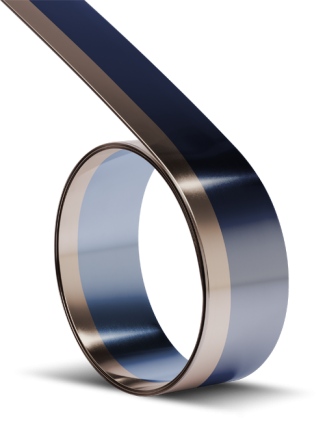
Daetwyler SwissTec introduced its first coated doctor blade, MDC LONGLIFE, in 1991. Since then, development has extended beyond geometry to encompass friction, wear, running-in behaviour and corrosion protection tailored to the application. (Source: Daetwyler SwissTec)
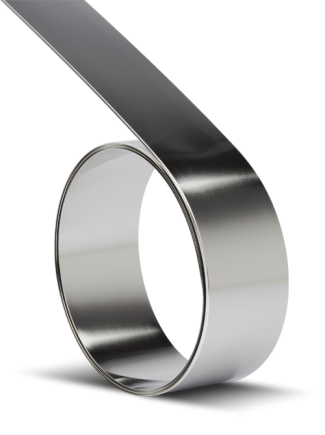
MDC STANDARD is available in various thicknesses and edge profiles. MDC ROSTFREI, also known as STAINLESS, is designed for corrosive conditions. (Source: Daetwyler SwissTec)
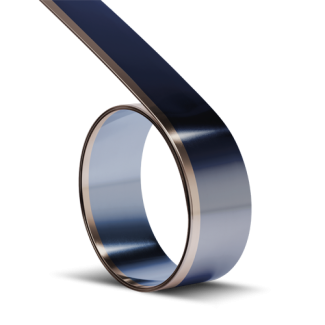
LONGLIFE PRO was introduced in 2023 specifically for gravure printing. The new Rototip profile provides consistently clean doctoring in solid and halftone areas without repeated blade adjustments. (Source: Daetwyler SwissTec)
Print defects rarely have a single cause
Hazing appears as an ink film in non-printing areas. Common causes include an excessively shallow effective blade angle, high blade pressure causing pronounced deflection, an overly wide contact area or unsuitable cylinder surface roughness. Low ink viscosity and slow drying can exacerbate the effect. Contact geometry, ink, drying and cylinder condition should therefore be assessed together.
Streaks and doctor blade lines frequently result from particles, pigment agglomerates, dried ink or a damaged blade edge. Effective filtration, clean ink circulation and regular cleaning are therefore just as important as selecting the right blade type. A line at a fixed position across the web suggests a local defect. Recurring transverse bands are more likely to indicate vibration, an excessively steep blade angle, high pressure or problems with the blade holder or oscillation mechanism.
Missing dots in the printed image may result from inadequate wetting, air trapped in the cells or an incorrect ESA setting. Premature cylinder wear is more likely to indicate a high blade load per unit length, abrasive ink or contamination. The orientation of a defect and the way it develops over time generally provide more useful diagnostic information than a hasty blade change.
Higher speeds narrow the process window
As web speed increases, so do hydrodynamic forces, vibration and thermal loads. At the same time, less time is available for cell filling and air displacement. Deviations in ink viscosity, temperature, blade angle or blade stiffness become apparent more quickly. The blade must maintain reliable contact across the full width without fluttering, while operating at the lowest possible pressure.
Highly pigmented white inks, effect inks, varnishes and cold-seal coatings place particularly high demands on the doctor blade. With water-based ink systems, corrosion and drying become central considerations. Blade selection should therefore be addressed during job preparation.
From tonal instability to the lamella blade
According to Daetwyler SwissTec, the lamella blade originated in the early 1970s in response to a production problem at Ringier in Zofingen. During printing of “Ringiers Unterhaltungs-Blätter”, known as the “yellow magazine”, an abrasive brown ink caused rapid wear of the bevelled blade. As its contact area widened, tonal values changed. Ringier employee Hans Burgener responded by developing a blade with a stepped lamella edge. The first versions, which were still produced by etching, provided a largely stable contact geometry.
Ringier entrusted further development and patenting to Max Daetwyler + Co. Daetwyler replaced etching with high-precision grinding on its own automated machines, investigated different steel grades and established the basis for reproducible blade production in coils. Commercial sales began in 1972. Burgener and Ringier provided the original solution; Daetwyler developed it into a precision tool that could be manufactured to consistent standards for the international gravure market.
The defined contact zone reduced tonal drift and allowed lower blade pressure, easing the load on the chrome-plated cylinder surface. According to the company, Daetwyler introduced its first coated doctor blade, MDC LONGLIFE, in 1991. Since then, development has extended beyond geometry to encompass friction, wear, running-in behaviour and corrosion protection tailored to the application.
From aircraft engineering to doctor blade specialist
Max Daetwyler founded the company in Dietikon in 1943. Its initial focus was aircraft maintenance and overhaul. After the Swiss federal government abruptly halted the Swiss Mirage programme in 1964, the company moved into new business areas. An enquiry from Ringier led to the construction of etching machines for gravure cylinder production. Its experience in precision manufacturing and materials processing later provided the foundation for the lamella blade.
With MDC PRECUT, a patented laser technology perforates the blade coil at the customer’s specified length with millimetre accuracy. The operator separates the blade by bending it at the perforation. (Source: Daetwyler SwissTec)
Today, Daetwyler SwissTec concentrates development and production in Bleienbach. The independent public limited company began manufacturing MDC doctor blades there on 1 January 2008. In 2012, the group acquired Daetwyler IBO Tec, expanding its research and development capabilities in Germany.
Daetwyler SwissTec is the global market leader in doctor blade development and production. The company attributes its market position in part to the industrial-scale manufacture of lamella blades, its coating technology and many years of application expertise. Findings from print trials and technical support assignments feed into blade development.
Doctor blades for different requirements
The portfolio ranges from standard steel blades to coated specialist products:
MDC STANDARD is available in various thicknesses and edge profiles. MDC ROSTFREI, also known as STAINLESS, is designed for corrosive conditions. Daetwyler SwissTec recommends this version particularly for water-based inks and reports longer service life than standard steel.
MDC LONGLIFE is a coated blade for flexographic and gravure printing. Daetwyler SwissTec positions it for long runs and states that it reduces drag-out, streaking and hazing.
LONGLIFE PRO was introduced in 2023 specifically for gravure printing. The new Rototip profile provides consistently clean doctoring in solid and halftone areas without repeated blade adjustments. Low friction and low blade pressure reduce stress on the chrome surface. Available edge profiles include lamella, Multiblade and the new Rototip. The aim is a stable blade setting throughout the run.
MDC GOLD is a 0.15 mm thick lamella blade for gravure printing. It requires no running-in period and wipes the chrome surface precisely at different contact angles.
ROTOSTAR is positioned as a coated solution for medium-length runs. A soft coating is intended to shorten the running-in period and reduce hazing and streaking. A coating covering all surfaces provides corrosion protection.
GAMUTSTAR is designed for extended colour gamut (ECG) applications and long sequences of print jobs. A base coating and soft topcoat are intended to improve service life and running-in behaviour. Originally developed for flexographic printing, the blade is now also specified for gravure. In ECG printing, fluctuations in one printing unit can affect several brand colours reproduced using that colour. GAMUTSTAR is therefore intended to stabilise doctoring and limit tonal shifts.
MDC PRECUT addresses blade cutting and operator safety. A patented laser technology perforates the blade coil at the customer’s specified length with millimetre accuracy. The operator separates the blade by bending it at the perforation. This eliminates manual cutting and the associated risk of injury. PRECUT is available for all MDC doctor blades.
A small cost item with an impact on OEE
An economic assessment must go beyond the price per metre. The doctor blade affects every component of overall equipment effectiveness (OEE) in gravure printing. Unplanned changes and troubleshooting reduce press availability. If unstable doctoring forces a reduction in speed, performance declines. Hazing, streaks and colour fluctuations reduce the proportion of saleable packaging. Additional costs arise from waste, cleaning, ink, energy and labour, as well as, where necessary, the refurbishment or replacement of a damaged gravure cylinder.
The most suitable blade is therefore not necessarily the most expensive, but the one that delivers the lowest total cost within the gravure process. The relevant measures are saleable metres per blade set, uninterrupted running time, short changeover times, cylinder condition and reproducible quality. Recording these measures allows blade performance to be assessed as a process metric. The doctor blade removes only a thin film of ink from the cylinder surface, yet it influences the economics of the entire gravure process.