Interview with Stefani Dhami, Head of GRA, marking the association’s 70th anniversary
“Gravure is modern, authentic and approachable”
von Ansgar Wessendorf,
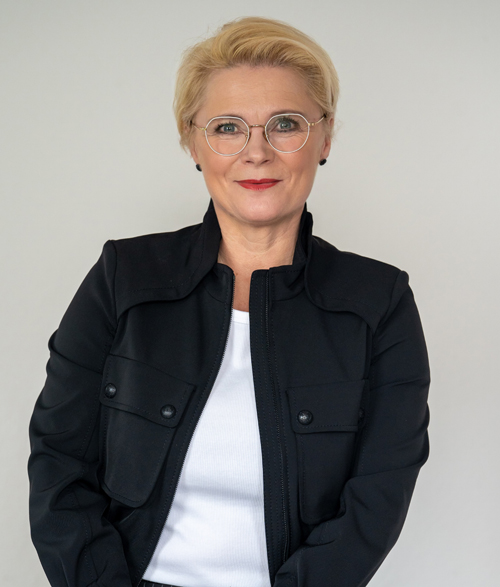
Stefani Dhami, Head of GRA: “For us, becoming global means no longer viewing issues primarily from a European perspective. Markets develop differently, as do their challenges and priorities – from sustainability and regulation to innovation, competitiveness, growth and skills development.”
(Source: GRA)
Founded 70 years ago as the European Rotogravure Association (ERA), the organisation has since become the Global Rotogravure Association (GRA).
Stefani Dhami has witnessed this transformation first-hand over the past 14 years. In this interview, she discusses the future of gravure, the association’s international outlook and the value of meeting in person.
Anzeige
Ms Dhami, you began your career in the secretariat of what was then the ERA 14 years ago. Which experiences from that period continue to shape your approach to association management and leadership?
Stefani Dhami: Back then, I had no idea how varied working for an association could be. It is about much more than organisation and administration: it means bringing people together, building trust and developing solutions collectively. An association’s secretariat is a radar station, a coordination centre and, at times, an emergency diplomatic service. You have to listen, understand different interests and keep the conversation going even when positions diverge.
In an industry driven by technology, the association needs to bring together technical expertise and put developments into context. I do not need to be able to answer every detailed question myself. What matters is bringing the right people together and turning their ideas into initiatives. My approach to leadership is therefore collaborative: providing direction, connecting expertise and translating productive discussions into tangible projects.
The change of name from European Rotogravure Association to Global Rotogravure Association reflects a broader geographical remit. How has this changed the association’s role?
Stefani Dhami: The transition from ERA to GRA was far more than replacing a single letter. Although our association has European roots, the gravure industry has long operated on a global scale. The process is particularly important to industry in China, India and Southeast Asia, as well as in Africa, the Middle East and Latin America. We wanted our name and the way we work to reflect that reality.
For us, becoming global means no longer viewing issues primarily from a European perspective. Markets develop differently, as do their challenges and priorities – from sustainability and regulation to innovation, competitiveness, growth and skills development. We want to bring these perspectives together. “Global” must be more than a word on a business card. It needs to be reflected in who has a seat at the table and the regions in which we are active.
Looking back over 70 years of the association’s history, which changes have had the greatest impact on gravure, and how has the GRA supported its members through them?
Stefani Dhami: Today, gravure is shaped by digitalisation, automation and intelligent production processes, as well as by new applications in packaging and decorative printing. At the same time, requirements for product safety and sustainability have increased, and innovations are reaching the market more quickly.
Throughout these changes, the association’s role has been to provide guidance and facilitate exchange. At conferences, we discuss strategic and technological developments; in seminars, experts share practical knowledge; and plant visits allow members to see developments first-hand. Our role is to ensure that our members have the information and connections they need to help shape this transformation.
If you had to sum up gravure’s competitive advantage in one point, what would you identify as its defining strength?
Stefani Dhami: Its distinctive combination of quality, productivity and reliability. Gravure can deliver highly consistent results over long production runs while meeting demanding requirements for a pack’s visual impact.
Other printing processes have clear strengths of their own. Gravure, however, combines strong visual impact, consistent quality, high productivity and excellent repeatability. A pack should look convincing and perform reliably, whether it is the first or the millionth produced.
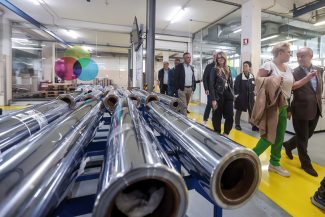
Participants at the 2024 ERA conference visited Portuguese gravure cylinder manufacturer Tecnogravura. Company visits are an established part of the GRA’s events programme, giving participants direct insights into industrial practice. (Source: ERA)
The process is particularly strong in demanding flexible packaging applications, but also in decorative printing and various specialist fields. At the same time, the industry is working to make production more flexible and efficient. Gravure is therefore not a lumbering tanker that can only travel in a straight line. With the right equipment, it can be quite agile.
Smaller batch sizes, shorter lead times and personalisation are changing production requirements. How does gravure need to evolve, and what role do digitalisation and artificial intelligence play?
Stefani Dhami: Gravure must retain its traditional strengths. The key is to make the entire workflow more efficient, from job preparation through to the next job. Digitalisation, automation and effective coordination throughout the value chain can help achieve this.
Artificial intelligence can, for example, analyse production data, detect defects or support maintenance planning. Member companies have already implemented applications. But AI is no electronic master printer. It remains a tool for skilled professionals.
For the GRA, it is important to encourage the exchange of experience on useful applications and help companies distinguish between tangible benefits and marketing promises. Gravure does not need to imitate another printing process. Competitiveness comes from intelligent development, not from copying.
The sustainability debate often focuses on substrates and recyclability. How do you assess the progress made by the gravure industry?
Stefani Dhami: Sustainability cannot be meaningfully assessed through a slogan or by looking at a single process step. What matters is the application as a whole: which material is used? How efficiently is it produced? How long does the packaging protect the product? And how effectively can it be recovered at the end of its life?
The gravure industry is working to use resources more efficiently, reduce energy consumption and production waste, and keep materials in circulation. Progress is also being made in inks, coatings and printing formes.
As an association, we want to provide robust information and enable an informed, objective discussion. Labelling entire printing processes as sustainable or unsustainable helps no one. We need comparable data and an assessment of the specific application.
With our life cycle assessment, we deliberately made an evidence-based contribution to this discussion. Our aim was not to pit individual printing processes against one another, but to provide robust data. Sustainable decisions should be based on facts, not assumptions or slogans. As an industry, we have strong arguments to put forward. But sustainability must be more than a glossy brochure. It needs to be transparent and measurable.
The GRA sees itself as an international platform for knowledge, training and networking. What role does your events programme play in this?
Stefani Dhami: A central one. An association thrives on more than position papers and committee meetings. It depends on people coming together, sharing experience and developing solutions collectively.
Our flagship international event is the International Gravure Days. Experts from different regions and across the value chain discuss market changes, technology, sustainability, regulation and the future of gravure. Alongside the conference programme, personal conversations and visits to companies or trade fairs are important. After all, trust is not built through video conferences alone.
ProGravure offers our members a more informal forum for discussing current issues. The GRA Talks Factory events take participants into companies and production environments. Plant tours, technical presentations and moderated discussions combine learning with networking.
Training is another priority. The Basic Gravure Seminar provides a practical overview of the process chain. We also offer company-specific seminars and digital formats. A conference provides the wider perspective, a seminar builds knowledge, a plant visit demonstrates practice, and an online discussion enables a quick exchange. Every event must offer tangible value – and sometimes the best collaboration begins over coffee.
Many companies face difficulties recruiting skilled staff and attracting young talent. How can young people be encouraged to pursue a career in gravure?
Stefani Dhami: Gravure has far more to offer young people than many realise. Modern printing and converting processes combine advanced technology with creativity – from automation and data analysis to sustainable production concepts. We need to make this reality more visible.
Gravure brings together technology, design, materials science, quality management and sustainability. The key is to give young people an early opportunity to experience this diversity – through seminars, plant visits, internships or contact with companies.
The Basic Gravure Seminar provides a practical introduction, while the Talks Factory events offer insights into production and development processes. At the same time, we want to expand our collaboration with universities, vocational schools and research institutions, and connect students with companies at an early stage.
It is equally important to give young employees responsibility and a visible role – as speakers, panellists or moderators. They are the most credible ambassadors for our industry’s future. Ultimately, we need to present gravure as the innovative process it is today: modern, authentic and approachable.
What strategic identity should guide the GRA into its eighth decade, and how will you personally measure its success?
Stefani Dhami: The GRA should be a global network defined by expertise and a commitment to action. Together with our members, we want to provide reliable information and high-quality training, and foster open exchange across every part of the value chain.
Our events programme is a key part of this strategy. We want to develop the International Gravure Days further as a global industry gathering, strengthen regional formats and take the Talks Factory events more frequently to the places where innovation happens in practice: companies, technology centres and universities. At the same time, we want to intensify the exchange between industry, academia and the next generation of skilled professionals.
We also want to combine in-person and digital formats effectively. Not every subject requires a conference lasting several days, and not every discussion works in a one-hour webinar. Sometimes a topic needs a large stage; sometimes ten experts around a table are more productive.
Personally, I would measure our success by whether our events become more international and diverse, whether we reach new audiences, and whether encounters lead to tangible outcomes: a joint project, a new initiative or a long-term partnership.
For me, the most rewarding response after a GRA event would be more than simply: “That was interesting.” Even better would be: “Let’s turn that into something.”
After 70 years, we have every reason to be proud of our history. We should simply avoid resting on our achievements – because even the best gravure cylinder produces nothing if it is left in storage.