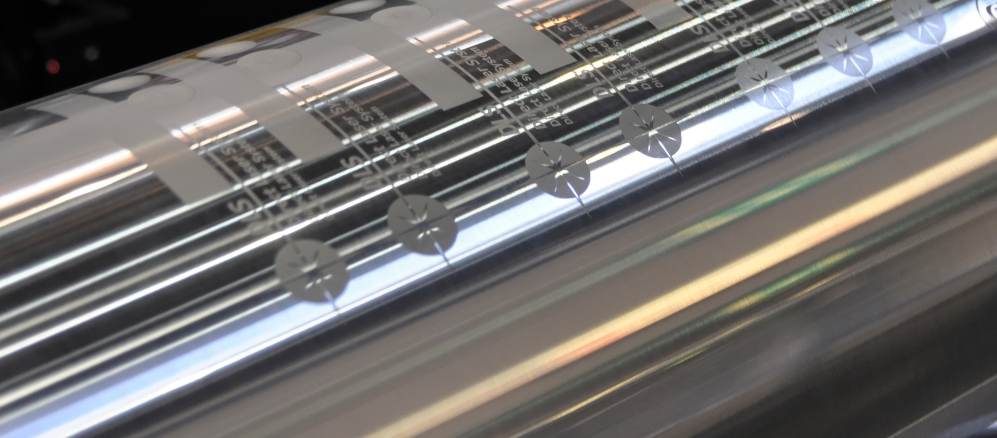
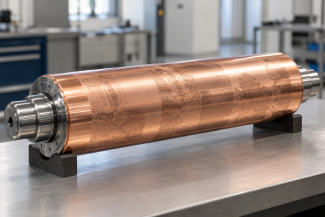
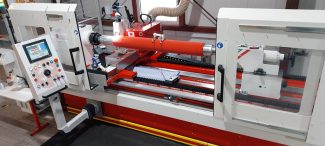
Engraved and chrome-plated gravure printing cylinder(Photo Credit: Drupa 2012)
The perception of packaging gravure printing as an environmentally questionable and cost-intensive process has proven remarkably persistent. Yet this image is increasingly detached from industrial reality. Much of the criticism still associated with gravure printing stems from production practices of previous decades and no longer reflects the technological, ecological, or economic standards of today’s operations.
In recent years, gravure printing has undergone a profound transformation — technologically, environmentally, and economically alike.
Anzeige
Sustainability Beyond Legacy Perceptions
For decades, the use of hexavalent chromium and the repeated manufacturing of new steel cylinder bases shaped the reputation of gravure printing as a resource-intensive process. Although this perception continues to influence market opinion, the industry itself has long since moved on. Modern gravure production is increasingly defined by durability, circular material flows, and highly optimized process chains — principles fully aligned with contemporary sustainability strategies.
One of the most significant advances lies in the reusability of gravure cylinders. Metallic cylinders can remain in circulation across numerous production cycles, substantially reducing the consumption of primary raw materials while minimizing waste generation. At the same time, key materials such as steel, copper, and chromium are now systematically recovered and recycled. As a result, gravure printing is steadily evolving into a highly circular manufacturing system.
The materials used within the process have also changed fundamentally. The industry-wide transition from Chromium VI to Chromium III marks an important milestone in environmental protection and occupational safety and underscores the sector’s capacity for technological innovation.
Efficiency as an Overlooked Strength
Beyond circularity, process efficiency has become another defining advantage of modern gravure printing. Laser-engraved cylinders enable significantly more precise ink transfer, lowering ink consumption while simultaneously ensuring consistently high print quality. Combined with the inherent process stability of gravure technology, this translates into lower waste rates, reduced downtime, and a considerably more efficient use of resources overall.
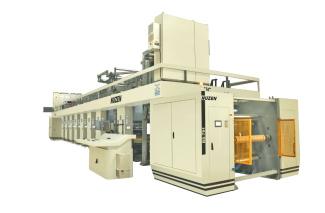
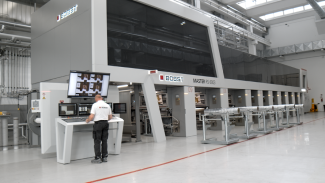
The economic assessment of gravure printing likewise deserves a more differentiated perspective. Contrary to long-standing assumptions, printing form costs in modern packaging gravure are often highly competitive. Fully automated and digitalized production workflows, coupled with the near-unlimited reusability of cylinders, have substantially weakened many of the traditional cost arguments directed at the process.
Yet despite these advances, a noticeable gap remains between technological reality and market perception. Many purchasing decisions and industry assumptions continue to be shaped by outdated narratives rather than current production realities.
This, perhaps, is gravure printing’s greatest challenge today: not the technology itself, but the perception surrounding it.