70 years of the GRA – an interview with President Simon Sonn
Gravure across mature and growing markets
von Ansgar Wessendorf,
GRA President Simon Sonn: “Since the transition from the ERA to the GRA, our flagship event, International Gravure Days, has attracted significantly more members and non-members from different regions. We expect participants from around the world at our 70th anniversary event in Munich.”
(Source: GRA)
For 70 years, the Global Rotogravure Association (GRA) has supported the development of gravure printing. As the association marks its anniversary, the industry is following markedly different paths across regions: demand is declining in Europe and North America, while increasing in parts of Asia and Africa. GRA President Simon Sonn discusses the influence of demographic trends, run lengths, competing technologies and sustainability requirements – and explains how the association intends to strengthen international exchange.
The Global Rotogravure Association celebrates its 70th anniversary this year. What does this milestone mean for the international gravure industry, and which key developments have shaped the GRA?
Anzeige
Simon Sonn: This is a special moment for the association. The anniversary underlines the value it provides to its members and the gravure industry as a whole. The transition from the ERA to the GRA marks a new chapter and promotes the exchange of knowledge between established and emerging markets.
You now lead the GRA and bring a distinctly international perspective, with a particular focus on Africa. What priorities would you like to set during your presidency?
Simon Sonn: My predecessor, Davide Garavaglia, reminded me that three years is too short to achieve every objective. I therefore need clear priorities. I want to build on earlier initiatives, strengthen our international network, expand and diversify our membership, and increase the value of the services we offer.
Gravure has changed considerably over recent decades. How do you assess its current position in the global packaging and printing market?
Simon Sonn: Every printing technology has its place. While demand for gravure has declined in some regions, particularly Europe and the US, it continues to grow in India, China, the Middle East, Southeast Asia and Africa. The main drivers in these regions are young, growing populations and increasing demand for packaging for mass markets. Gravure remains well suited to these applications.
Which technological developments will have the greatest influence on the future of gravure, particularly in competition with flexographic and digital printing?
Simon Sonn: Flexography is the competing process with the greatest impact, especially in mature markets with low growth. The reasons include its perceived benefits, technology-related costs and declining demand for long runs. In emerging markets, flexography and gravure continue to coexist, particularly in flexible packaging. Digital printing has less of an impact, as it is better suited to short runs. Gravure remains the preferred choice for longer runs.
Sustainability and the circular economy increasingly shape brand owners’ requirements. What progress is the gravure industry making in energy efficiency, recyclability and CO₂ reduction?
Simon Sonn: The GRA has conducted a sustainability study led by Professor Lutz Engisch of Leipzig University. It examines the environmental impact of gravure compared with other printing technologies. Among the factors considered were gravure cylinders, inks, solvents and cylinder transport. The results are available to all GRA members.
Europe has traditionally been regarded as a centre of innovation in gravure. Which developments from other regions are now also setting international standards?
Simon Sonn: Europe remains a leading centre of innovation. However, China and India are also developing interesting best practices. Standards and reference specifications such as ISO Coated v2 and Fogra specifications remain relevant. Brand owners want to standardise their packaging print and brand presentation across regions and markets.
At the same time, many European companies face considerable economic and regulatory pressure. How do you assess Europe’s competitiveness in the global market?
Simon Sonn: European companies will remain strong competitors globally. This is due to their access to markets and the maturity and size of their economies. Many companies in the gravure and packaging industries are keeping pace with change. The focus on energy efficiency, recyclability and CO₂ reduction strengthens Europe’s position. One example is the response to restrictions on hexavalent chromium.
North America is seeing profound changes in its packaging sector, driven by e-commerce, automation, AI and new sustainability standards. What impact is this having on gravure in the US and Canada?
Simon Sonn: As in other mature markets, demand for gravure in the US has been declining for some time. With run lengths falling significantly, less than 20 per cent of the market uses gravure as its preferred technology. Canada, by contrast, is showing signs of growth. Some gravure companies there are integrating upstream processes and bringing cylinder production in-house.
Asia is developing rapidly. What role do China, India and Southeast Asia play in the global gravure and packaging industry today?
Simon Sonn: China and India are growth markets because of their large and growing populations. Prepress, or printing forme production, was regarded as a disadvantage of gravure because of its initial costs. By using lighter gravure cylinders, China, India and, to a lesser extent, Southeast Asia can produce at more competitive prices and export at lower cost. Lightweight cylinders can, however, be less stable on high-speed presses.
India in particular is often described as a future growth market. What specific opportunities do you see there for gravure?
Simon Sonn: India’s population has exceeded 1.45 billion, making it the world’s most populous country. Rising consumer spending makes gravure a suitable technology. India is also the fastest-growing major economy, with projected GDP growth of around 7.5 per cent. This price-sensitive market demands consistent quality and efficiency.
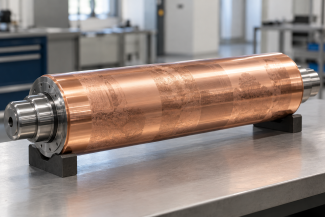
In gravure, the printing forme has a greater influence on print quality than in other printing processes (Source: Janoschka)
Africa is attracting increasing attention from international investors. How do you assess the development of the African packaging and gravure market?
Simon Sonn: Africa is often viewed as a single economic region, but it is highly diverse. Its population is expected to reach 1.7 billion in 2030. At the same time, poverty remains widespread. Fewer than ten of its 54 countries generate 80 per cent of its GDP. Conducting transactions can also be difficult. Nevertheless, Africa remains attractive to patient, resilient investors in the packaging and gravure industries.
You highlighted the opportunities in Africa several years ago. What has changed on the continent since then?
Simon Sonn: An average age of around 20 makes Africa an attractive consumer market and increases demand for packaged goods. Between 2022 and 2025, the population grew by around 150 million, while GDP growth increased from approximately 3.8 to 4.4 per cent. Companies must, however, navigate socioeconomic, infrastructure and political challenges. Countries in the Middle East, particularly Saudi Arabia, are expanding their presence to secure food and energy resources. South Africa, Egypt, Nigeria and Kenya are the main focus.
You place particular emphasis on South Africa as a strategic market. What role does the country play within the African packaging industry?
Simon Sonn: South Africa’s banking system ranks first in Africa and among the top 50 worldwide. Combined with a relatively stable currency, this makes the country attractive for foreign direct investment. South Africa is one of Africa’s three largest economies and offers a gateway to the continent. Between 2022 and 2025, the installed base of gravure presses increased by 19 per cent. The packaging market is worth around US$12 billion and is expected to grow by four to five per cent annually.
What challenges must international companies overcome to achieve lasting success in African markets?
Simon Sonn: International companies invest in African markets because they have identified opportunities for long-term success. This requires patience, resilience and determination. It may take longer to recoup investment than in rapidly growing emerging markets such as China, India and Southeast Asia, but the returns can be exceptionally rewarding.
Which developments in consumer goods, food packaging and branded products could create new opportunities for gravure in Africa?
Simon Sonn: The fast-moving consumer goods (FMCG) and retail sector is growing by just under eight per cent in value terms. The food packaging market, worth just under US$1.9 billion, is expected to grow to US$2.9 billion, driven by urbanisation and consumer demand. South Africa’s beverage label market, covering products such as soft drinks, beer and cider, is worth US$390 million. Growth of around four per cent is expected. Visually striking designs are in demand, particularly for beer labels and cigarette packaging, including embossing, tactile effects and textured varnishes.
Global supply chains and production locations are changing rapidly. How are geopolitical developments affecting the international printing and packaging industry?
Simon Sonn: End customers and brand owners are driving the localisation of the entire supply chain. Recent geopolitical events, such as the crisis in the Middle East, are accelerating this trend. Supply shortages caused by logistics and transport problems, and the resulting loss of revenue, often outweigh the benefits of centralised procurement and production.
Do you expect greater regional differences in packaging requirements and printing technologies between Europe, the Americas, Africa and Asia in the future?
Simon Sonn: Yes. This trend is already evident. It is largely driven by a shift in demand from specialised offerings with numerous variants towards supplying mass markets. In regions with a low average age and a growing population, such as China, India and Africa, demand for gravure-printed packaging will increase. In Europe and North America, by contrast, flexographic, offset and digital printing are likely to gain ground. The reasons are higher average ages and slower or negative population growth.
The GRA increasingly sees itself as a global platform for knowledge exchange and collaboration. What role can the association play in strengthening international industry networks?
Simon Sonn: Since the transition from the ERA to the GRA, our flagship event, International Gravure Days, has attracted significantly more members and non-members from different regions. We expect participants from around the world at our 70th anniversary event in Munich from 7 to 9 October. In addition, we offer the in-person Talks Factory event and online formats such as Café Gravure, ProGravure and webinars. These formats have increased the GRA’s visibility and recognition worldwide.
Looking ahead, where do you see the global gravure and packaging industry in 2035, and what role will Africa play?
Simon Sonn: I expect growing demand for gravure and packaging in emerging markets such as Africa. The need for longer runs with consistent quality will remain. In mature markets with much slower population growth, such as Europe and North America, gravure is likely to decline gradually in packaging. However, it could gain ground in specialist applications and decorative printing in these markets.